About embedded software and medical devices

Embedded computers, gaming platform, Console server

Stephen covers key system software issues that embedded systems developers must address, including next-generation SoCs that contain multiple cores and methodologies to properly allocate the applications between several types of operating systems.

Embedded developers face several decisions when developing medical embedded devices, from selecting the best system software for optimal application performance, to understanding the interactions and limitations between the software operating system and target hardware. Should the software engineer use a small micro-kernel,Real-Time Operating System (RTOS), or a General Purpose OS (GPOS) such as Android or Linux? Other considerations include the physical size of the system for portability and functionality requirements, including faster performance, power consumption, data protection, and display (user interface) technology. And FDA certification and industry standards that affect embedded software selection come into the mix as well.

Modern medical devices are evolving at a record clip. From portable wireless units for patients to use at home to larger more complex devices used by healthcare professionals at a facility, there’s no question we are at the forefront of developing new ways to empower patients and medical professionals alike. How do we make sure the system software that controls these devices does exactly as planned with little to no risk of harming the patient?

refer:

http://embedded-computing.com/articles/minimizing-software-todays-medical-devices/

Posted in Console server, Embedded Systems, Gaming Platform | Tagged , , | Comments Off on About embedded software and medical devices

About Modular standards extend ARM platform

The competitive market for smart, connected devices is heating up, which requires OEMs to stay focused on differentiating their products and getting to market quickly. ARM-based building blocks are enabling OEMs to reallocate the resources needed to find, install, program, and troubleshoot drivers or debug hardware and concentrate instead on their core competencies. With prevalidated platforms that are fully configured and tested to deliver the required interoperability, compatibility, and functionality, OEMs can focus on application development and reuse existing application-specific software on a flexible hardware framework.


ARM addresses smart, connected application requirements

The requirements of today’s smart tablet and HMI tool applications extend beyond technology and power specifications to include rugged, extended life-cycle product support. These applications are typically portable systems that challenge embedded designers with space constraints and require fully sealed fanless enclosures that must operate reliably over extended periods. Designers have struggled to make existing standards and higher power consumption processor architectures work in these applications, and thus have anticipated the introduction of more focused products specifically designed to support ARM-based subsystems.

Similar to other popular CPU architectures, the ARM architecture offers an open-systems approach. ARM-based platforms provide excellent performance-per-watt ratios with very low power consumption at less than 1 W operating power, as well as CPU performance that is comparable to or exceeds what is offered in the latest low-power x86 or RISC-based processors. ARM processors deliver the performance needed to power an easy-to-use Graphical User Interface (GUI) for mobile smartphones and tablets and also support extended-temperature operation. When ARM’s up to 15-year platform longevity is added to the list of benefits, it is easy to see that these processors meet most smart, connected embedded application demands. However, in the past, a key element to success was missing – new embedded technology standards needed to be established to help drive continued innovation and swift platform adoption.

Global support for ARM platform standards

A new vendor-independent standards organization called the Standardization Group for Embedded Technologies (SGET) was organized to help speed the development of standardized hardware and software for embedded computing. To keep pace with market demands and the dynamic pace of technology, SGET has set simplified rules and shorter objection periods so that specifications can be passed much faster.

The first working group formed under SGET has defined the Ultra-Low-Power Computer-On-Module (ULP-COM) standard aimed at supporting ultra-low-power applications using System-on-Chip (SoC) devices. Figure 1 shows an example of a ULP-COM platform. The ULP-COM specification is characterized by its extremely flat form factor dimensions and its optimized pinoutfor SoC processors. The ULP-COM standard specifies a 314-pin connector with a height of just 4.3 mm (the MXM 3.0). This connection method satisfies mobile design requirements for very low-profile, robust, and cost-effective modules. For additional design flexibility, two different module sizes are specified – a short module measuring 82 mm x 50 mm and a full-size module measuring 82 mm x 80 mm.


Embedded computers, gaming platform, Console server

Embedded Computers, gaming platform, Console server


Standardization brings interface support benefits

Before ULP-COM, all existing module specifications were primarily based on x86 technology and its associated chipsets that support a multitude interfaces such as USB, PCI Express, and PCI Express graphics ports geared to PC design. ARM, on the other hand, supports more traditional embedded ports such as UART, I2C, I2S, and SDIO.

The ULP-COM standard addresses the need for dedicated interfaces supported by the latest ARM processors, which makes it notably different from the  standard (see Figure 2). ULP-COM adds features that are not typically found on COM Express, such as the cost-effective parallel TFT display bus and MIPI display interface. It includes support for multiple SPI links and SDIO interfaces, which are needed for consumer camera and phone memory cards. ULP-COM also supports LVDS, HDMI, and embedded DisplayPort for future designs.


Embedded computers, gaming platform, Console server

Embedded computers, gaming platform, Console server


ULP-COM gives designers the standardized feature set specifically matched to ARM I/O. This feature set brings to light the importance software plays in enabling board compatibility and interchangeability and demonstrates why it has become a crucial system design decision now more than ever.

The value of a building block approach

ARM-based devices have been successfully implemented in many embedded systems. However, most of these existing systems offer limited interoperability and lack a clear, scalable design path. Furthermore, products that supported ARM in the past typically required more in-depth development, as the software was tied directly to both the hardware and the specific application, making them more proprietary in nature. That meant that any new design basically had to start from scratch. It was obvious that flexible building blocks were necessary to support the demands of evolving market applications.

This is where platform suppliers with experience bringing standardized form factors such as COM, Mini-ITX motherboards, and Pico-ITX embedded SBCs to market can benefit OEMs. It is this know-how for creating standardized modules that will create ARM-based platform building blocks that OEMs can leverage to secure system longevity and smooth migration from generation to generation. While ARM processors will never completely replace x86 or RISC processors in Embedded Systems, ARM-based computing platforms can be used as optimized building blocks for certain applications and market segments that are presently underserved.

Steps taken ensure easy adoption and long-term viability

Designers have realized that ARM processor-based platforms are ideal for low-profile, high-densityembedded devices such as tablets, smartphones, and HMI tools. ARM satisfies these application requirements with long product life – a minimum of 7 years and up to 15 years – with processors that are small in size and height and do not require a chipset. With no moving parts, simplified passive cooling and thermal management are achieved to eliminate points of failure for higher system reliability.

A strong ecosystem of hardware and software providers is currently overcoming the continuity of support issues associated with implementing ARM. The availability of standards-based platforms such as the new ULP-COM makes it easier for designers to implement and speed the development of ARM-based products. ULP-COM platforms deliver the desired performance-to-power ratios needed for portable and fully enclosed systems and offer an array of flexible display options for the full range of deployment needs.

Above all, the ULP-COM platforms gives OEMs a prevalidated building block approach that helps ease integration, reduce design risk, and shorten the time from development to deployment of smart, connected devices. The ability to reuse these known building blocks provides the needed interoperability and evolutionary design path embedded systems OEMs demand while also securing technology investments. Suppliers are taking these steps with the goal of making it easier for OEMs to adopt new modules so that ARM’s long-term viability and development benefits will be available for many years to come.

 Refer:

http://embedded-computing.com/articles/modular-scalability-smart-connected-devices/#at_pco=cfd-1.0

Posted in Console server, Embedded Systems, Gaming Platform | Tagged , , | Comments Off on About Modular standards extend ARM platform

2013 Embedded world bigger than ever!

Embedded computers, gaming platform, Console server

Embedded Computers, gaming platform, Console server

The international embedded community meets for three days at its annual highlight in Nürnberg from 26–28 February – the embedded world Exhibition&Conference. The exhibition has been the main hub of one of the most dynamic and highly specialized technology sectors for over 10 years. It is the world’s biggest international exhibition and conference event on embedded system technology. “embedded world will remain focused in 2013 but still grow appreciably. It is the largest event in the world for embedded system technologies and the most professional shop window,” explains Alexander Mattausch, Exhibition Manager of the embedded world Exhibition&Conference at NürnbergMesse.

Acrosser technology  —————->Booth Hall 2 2-519


Posted in Console server, Embedded Systems, Gaming Platform | Tagged , , | Comments Off on 2013 Embedded world bigger than ever!

Intelligent Power Management is the most important feature

Embedded computers, gaming platform, Console server

Both acrosser In-Vehicle PC, AR-V6100 & AR-V6005 have been selected as the winner of 21th Taiwan Excellence Award. This award delivered by the Ministry of Economic Affairs (MOEA) and Taiwan External Trade Development Council (TAITRA), to encourage Taiwan industries to upgrade and incorporate innovations into their new products.
All of above functions are controlled by software that can be customized based on ODM customers’ requirement. To execute the 24/7 mission-critical applications on the road, AR-V6100 & AR-V6005 are two of the best solutions for you.

Posted in Console server, Embedded Systems, Gaming Platform | Tagged , , | Comments Off on Intelligent Power Management is the most important feature

Slim Mini-ITX mainboard with Atom D2550

acrosser launches new slim Mini-ITX mainboard with Atom D2550, DDR3, HDMI, GbE, COM for Digital Signage and POS application.

Acrosser Technology Co. Ltd, global professional industrial and embedded computer provider, announces the new Mini-ITX mainboard, AMB-D255T1, which carries the Intel dual- core 1.86GHz Atom Processor D2550.

Embedded computers, gaming platform, Console server

Embedded Computers, gaming platform, Console server

.Intel Atom D2550 1.86GHz
.1 x DDR3 SO-DIMM up to 4GB
.1 x VGA
.1 x HDMI
.1 x 24-bit LVDS
.6 x USB2.0
.4 x COM
.1 x GbE (Realtek RTL8105E)
.1 x PS/2 KB/MS
.1 x MiniPCIe slot
.1 x SATA with power connector
.8-bit GPIO

Posted in Console server, Embedded Systems, Gaming Platform | Tagged , , | Comments Off on Slim Mini-ITX mainboard with Atom D2550

Tablets featuring the Intel® Atom™ processor

Embedded computers, gaming platform, Console server

Intel® Atom™ processor-powered device lasts longer. Enjoy longer battery life on a tablet, enough for anything the day throws at you.

Performance characteristics and compact size makes it an ideal for embedded uses—like televisions, interactive kiosks, and point-of-sale terminals.


from
http://www.intel.com/content/www/us/en/processors/atom/atom-processor-details.html?wapkw=atom

Posted in Console server, Embedded Systems, Gaming Platform | Tagged , , | Comments Off on Tablets featuring the Intel® Atom™ processor

Solution for Mini-ITX gaming box


embedded systems, gaming platform, single board computer

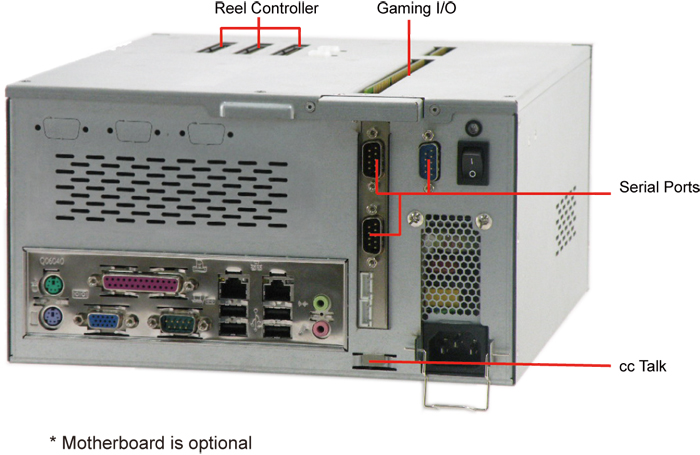
The Advantages of ACE-MINI
● Designed for any Mini-ITX motherboard with one PCI slot
● Chassis with 110-220V ATX power supply
● PCI Gaming I/O Gard (ACE-B2019/A)

The Features of ACE-MINI-A (with ACE-B2019A)
● 8-Liner (72-pin) Interface
● Digital Input: 30 x Optical Isolated Inputs
● Digital Output: 25 x 500mA and 2 x 1,000mA Outputs
● 1 x 8-bit Readable DIP Switch
● 4 x 16-bit Timer.
● 1 x Chassis Intrusion Switch + 6 bits on Golden Fingers Intrusion Inputs
● 1 x RS-232C/TTL and 2 x RS-232C/ccTalk Serial Ports
● iButton & ProtectU Security
● Dual 512KB Battery Back-up SRAM with Battery Low Monitoring
● Secured Real Time Clock (RTC)
● 110-220V ATX Power Supply

The Variety of Solutions to Meet Your Need


Embedded computers, gaming platform, console server

Embedded Computers, gaming platform, console server


Posted in Console server, Embedded Systems, Gaming Platform | Tagged , , | Comments Off on Solution for Mini-ITX gaming box

Intel Q35 Networking Appliance

Embedded computers, gaming platform, Console server
Embedded Computers, gaming platform, Console server

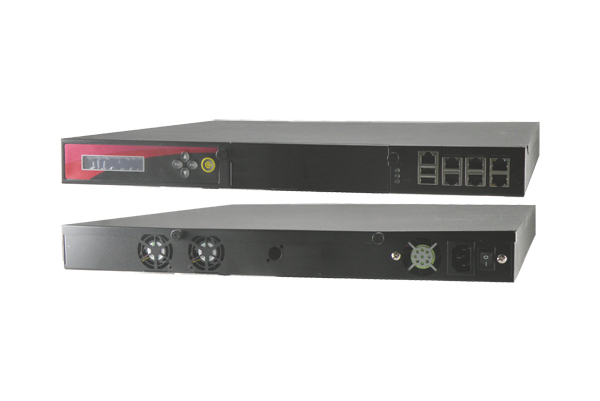
AR-R5700 Series of Networking Security Appliances based upon the Intel Q35 Chipset. It is a high performance system capable of utilizing the Core2Quad, Core2Duo, and Celeron Intel embedded processors.

It is the latest member of acrosser’s Networking 1U 19” rack mount System family. These Networking systems are designed for applications where reliability and performance are critical for the applications.

Posted in Console server, Embedded Systems, Gaming Platform | Tagged , , | Comments Off on Intel Q35 Networking Appliance

industrial and commercial embedded computing devices VIA Eden

Embedded computers, gaming platform, Console server

With its signature fanless operation, the VIA Eden™ processor family targets personal, business, industrial and commercial embedded computing devices that require ultra low power consumption, rock solid reliability and compatibility with standard x86 operating systems and software applications.

VIA Eden processors are scalable from 400MHz to 1.5GHz all within a maximum thermal envelope of 7.5 watts, and are available with a diverse range of feature sets that enable PC functionality and connectivity from traditionally single function devices.


Process Technology
Processor Name
Core Architecture
Clock Speed Range
FSB
Package/ Size
90nm
VIA Eden
‘Esther’
400MHz-1.2GHz
400MHz
NanoBGA2 21mmx21mm
90nm
VIA Eden ULV
‘Esther’
1.0GHz, 1.5GHz
400MHz
NanoBGA2 21mmx21mm
0.13um
VIA Eden-N
‘Nehemiah’
533MHz-1.0GHz
133MHz
NanoBGA 15mmx15mm
0.13um
VIA Eden ESP
‘Nehemiah’
667MHz-1.0GHz
133MHz
EBGA 35mmx35mm
0.15um
VIA Eden ESP
‘Samuel 2’
300MHz-600MHz
66/ 100/ 133MHz
EBGA

from

http://www.via.com.tw/en/products/processors/eden/

Posted in Console server, Embedded Systems, Gaming Platform | Tagged , , | Comments Off on industrial and commercial embedded computing devices VIA Eden

Intel® Core™ i7 Processor

embedded systems, gaming platform, single board computer
 

The 3rd generation Intel® Core™ i7 processor is the ideal choice for whatever you want to accomplish. Switch seamlessly between applications with effortless multitasking, thanks to Intel® Hyper-Threading Technology.

Enjoy a performance boost when you need it from Intel® Turbo Boost Technology 2.0,and stunning visuals—including 3D support and enhanced image processing—thanks to our built-in visuals. 

Wirelessly beam content to your big screen TV using Intel® Wireless Display, while you watch premium HD programs, courtesy of Intel® Insider™. 


From:

http://www.intel.com/content/www/us/en/processors/core/core-processor-family.html

Posted in Embedded Systems, Gaming Platform | Tagged , | Comments Off on Intel® Core™ i7 Processor